

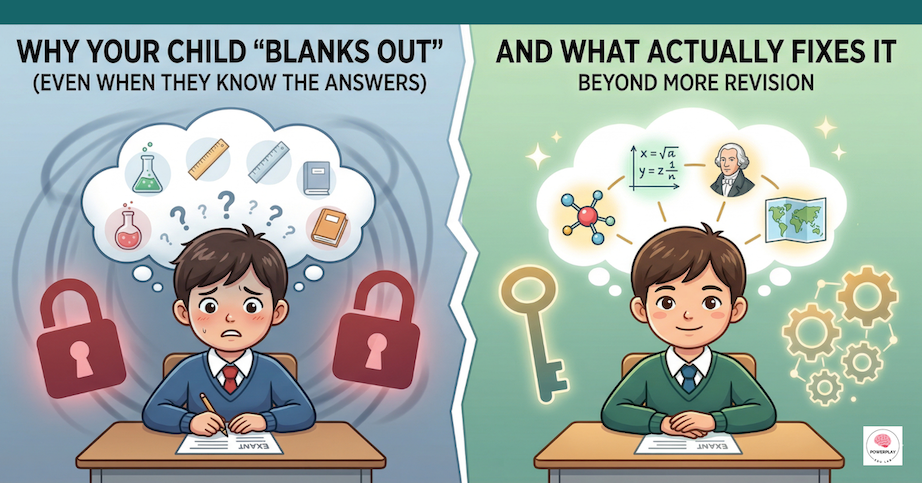
And What Actually Fixes It – Beyond More Revision
Does this sound familiar?
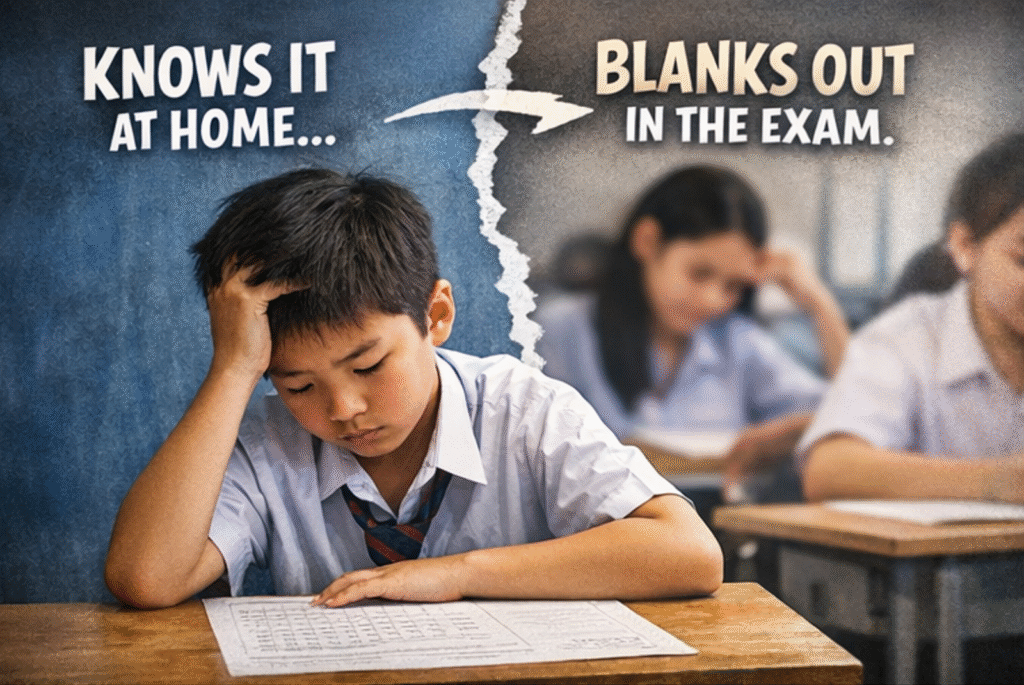
Your child confidently explains a Science concept at the dinner table.
They’ve revised. Practiced. Put in the effort.
But the moment they sit in the exam hall…
- Their mind goes blank.
- The answers disappear.
- And the results don’t reflect what they actually know.
It’s frustrating. And honestly, heartbreaking.
Because it’s not a lack of effort.
The Hidden Problem: It’s Not About Knowledge
Most parents assume:
“They just need more revision.”
But here’s the truth:
More revision doesn’t fix a mental block.
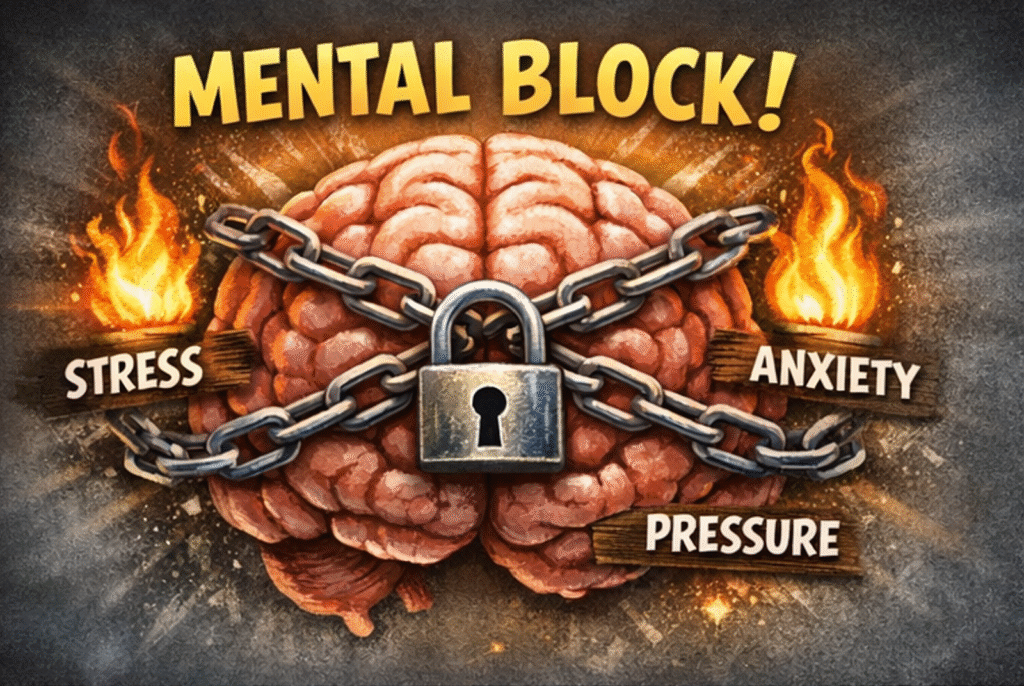
When stress levels spike during exams, something important happens in the brain:
- Anxiety rises
- Pressure builds
- And the brain’s “filing cabinet” temporarily locks up
Your child doesn’t lose the knowledge.
They just can’t access it in that moment.
Why This Happens (And Why It’s So Common)
Under exam pressure, the brain shifts into a stress-response mode.
Instead of calmly retrieving information, it prioritizes:
- Survival instincts
- Emotional reactions
- Fear of failure
The result?
- Even well-prepared students “blank out”
- Simple questions suddenly feel unfamiliar
- Confidence drops instantly
This is especially common in high-stakes exams like the PSLE, where pressure feels overwhelming.
The Real Solution: Build Calm, Not Just Content
If the problem isn’t knowledge…
Then the solution isn’t just more studying.
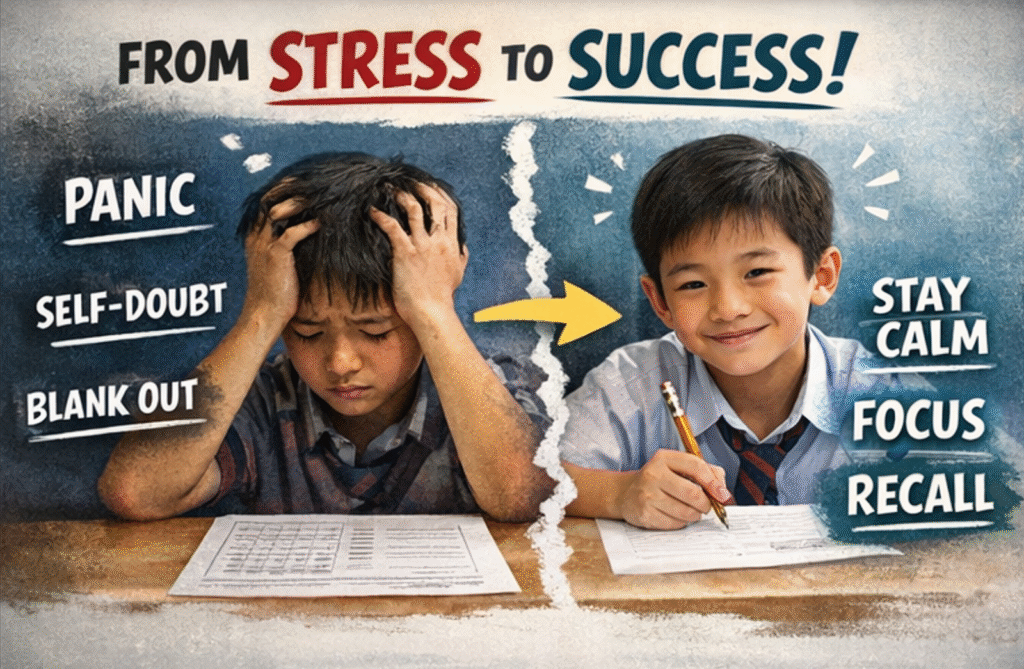
It’s helping your child stay calm enough to think clearly
Because:
Clarity unlocks knowledge. Stress blocks it.
3 Practical Ways to Help Your Child Stop “Blanking”
Strategy #1 – Teach Calm as a Skill (Not a Personality Trait)
Calmness isn’t something children either “have” or “don’t have.”
It’s a skill that can be trained.
Try this:
- Practice slow breathing before and during study sessions
- Simulate exam conditions in a low-pressure way
- Normalize feeling nervous—but show how to manage it
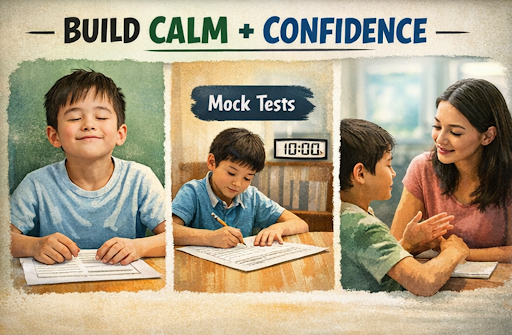
Strategy #2 – Recreate Exam Pressure During Practice
Many children only experience real pressure… in the actual exam.
That’s too late.
The Shift:
Make practice feel slightly uncomfortable
Try this:
- Timed practices
- Small “mock tests” at home
- Gradually increasing difficulty
This helps the brain learn:
“I’ve been here before. I can handle this.”
Strategy #3 – Strengthen the Mind–Content Connection
Knowing content is one thing.
Accessing it under pressure is another.
Your child needs both:
- Concept mastery
- Mental clarity
Try this:
- Ask them to explain concepts out loud (like teaching you)
- Use real-life examples to deepen understanding
- Encourage thinking, not just memorising
Bridging the Gap: Where Real Results Come From
The biggest breakthrough happens when we stop seeing learning as just:
“Study more → score better”
And start understanding this:
Results = Knowledge × Mental State
Even strong students struggle if:
- They panic
- They freeze
- They doubt themselves
But when clarity and confidence are present?
That’s when performance matches effort.
Conclusion
If your child is “blanking out,” it doesn’t mean they’re not capable.
It means:
- They need support beyond just revision
- They need tools to stay calm under pressure
- They need help unlocking what they already know
Because every child deserves this:
To walk into an exam…
and actually show what they’re capable of.
More tuition isn’t the answer if the problem is a mental block. If your child knows the content but can’t produce the results, you’re solving the wrong problem. Let’s fix the ‘blank out’ before the next weighted assessment.
Book a 15-minute Discovery Call [What’s App] to bridge the gap between your child’s effort and their grades.

Responses