

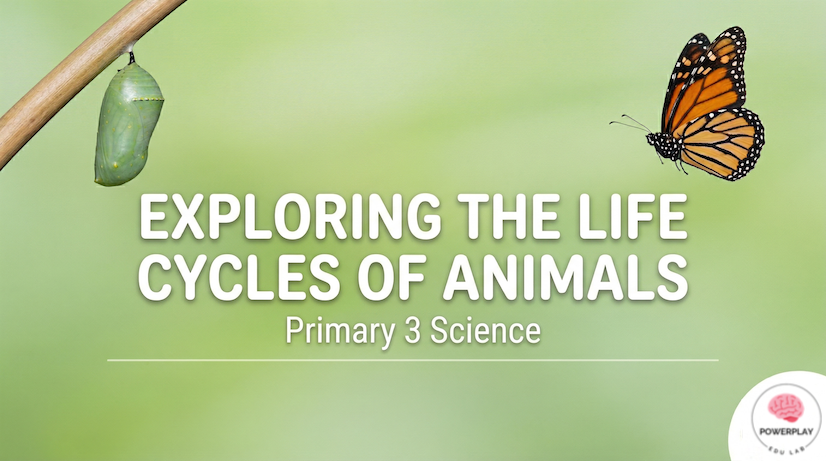
Have you ever wondered why a caterpillar looks nothing like a butterfly?
Or why a chick looks like a tiny version of its mother?
Every animal goes through a life cycle—a series of stages that a living thing passes through from the beginning of its life until it becomes an adult and can reproduce.
In the Singapore Primary 3 syllabus, we focus on the number of stages in these cycles and whether the young resembles (looks like) the adult.
Animals with a 3-Stage Life Cycle
These animals go through three distinct stages: Egg → Young → Adult.
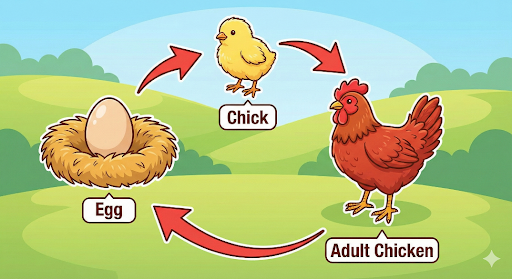
1. The Chicken (Bird)
- Stages: Egg → Chick → Adult
- Key Fact: The young (chick) resembles the adult. It just grows bigger and develops more feathers.
2. The Frog (Amphibian)
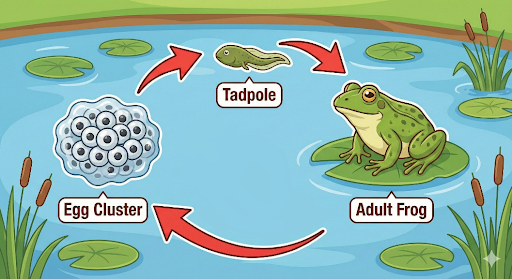
- Stages: Egg → Tadpole → Adult Frog
- Key Fact: The young (tadpole) does not resemble the adult. It undergoes a big change in appearance.
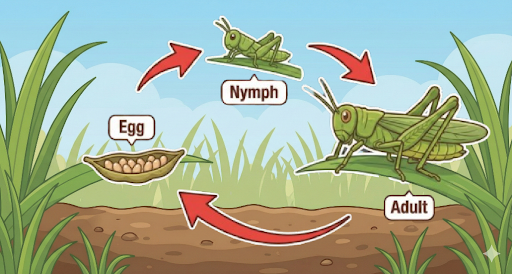
3. Insects: Grasshopper and Cockroach
- Stages: Egg → Nymph → Adult
- Key Fact: The young is called a nymph. It resembles the adult but is smaller, has no wings, and cannot reproduce yet. As it grows, it undergoes moulting (shedding its skin) to grow a new, larger one.
Animals with a 4-Stage Life Cycle
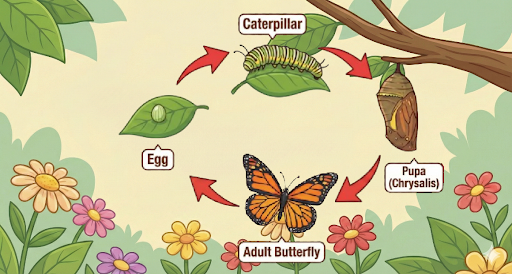
These animals go through four distinct stages: Egg → Larva → Pupa → Adult.
1. The Butterfly
- Stages: Egg → Larva (Caterpillar) → Pupa (Chrysalis) → Adult Butterfly
- Key Fact: The larva and adult have different food sources. The larva eats leaves, while the adult feeds on nectar. This prevents them from competing for the same food!
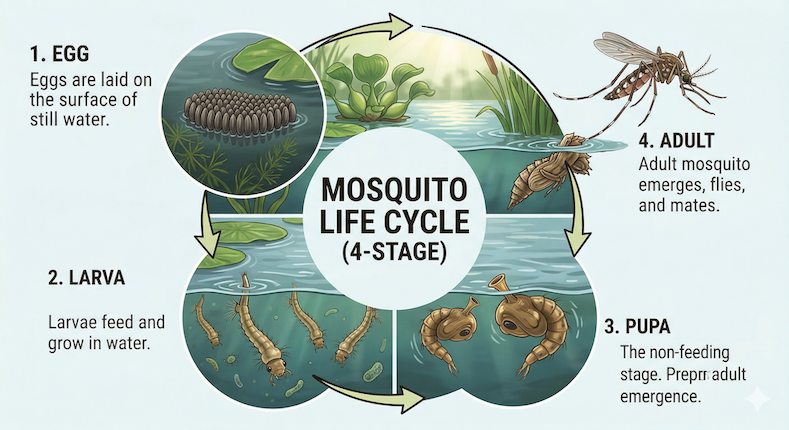
2. The Mosquito
- Stages: Egg → Larva → Pupa → Adult Mosquito
- Key Fact: The first three stages (Egg, Larva, Pupa) happen in water. Only the adult lives on land and in the air.
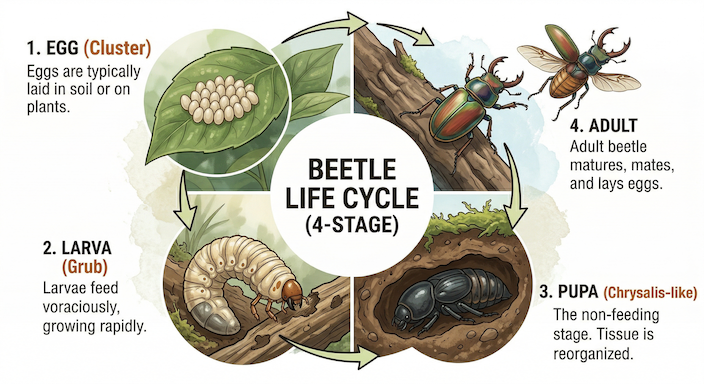
3. The Beetle
- Stages: Egg → Larva (Mealworm) → Pupa → Adult Beetle
Summary Comparison Table
Use this table to quickly spot the differences for your exams:
| Animal | Number of Stages | Does Young Resemble Adult? |
| Chicken | 3 | Yes |
| Frog | 3 | No |
| Grasshopper | 3 | Yes |
| Butterfly | 4 | No |
| Mosquito | 4 | No |
Why do Life Cycles Matter?
Life cycles ensure the continuity of the species. If animals did not reproduce and pass through these stages, their kind would eventually become extinct.
Caring for Animals
Animals are living things and should be treated with care.
We should:
- Observe animals gently
- Not harm insects or animals
- Respect their habitats
Being curious about animals helps us understand nature better.
In Conclusion…
- All animals have a life cycle
- Different animals have different stages
- Some animals go through metamorphosis
- All living things grow and change
Have you learned something new today?
Master Your Life Cycles!
Ready to see if you can identify the stages and characteristics like a pro?
Click here to download your FREE Primary 3 Life Cycles of Animals Worksheet!

Responses