

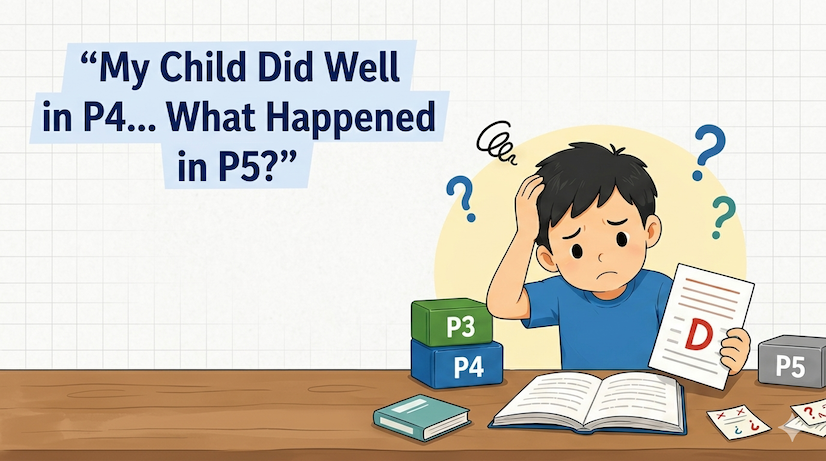
“My child scored 85% in P4 Science. Now in P5, they barely passed. What happened?”
If you have uttered these exact words over the last few weeks, brace yourself: You are experiencing the infamous P5 Science Cliff.
Many parents assume their child suddenly became “lazy,” “careless,” or “lost focus.” So, what do you do? You buy more top-school exam papers, enforce longer study hours, and make them drill the keywords until they are blue in the face.
But the marks still don’t move.
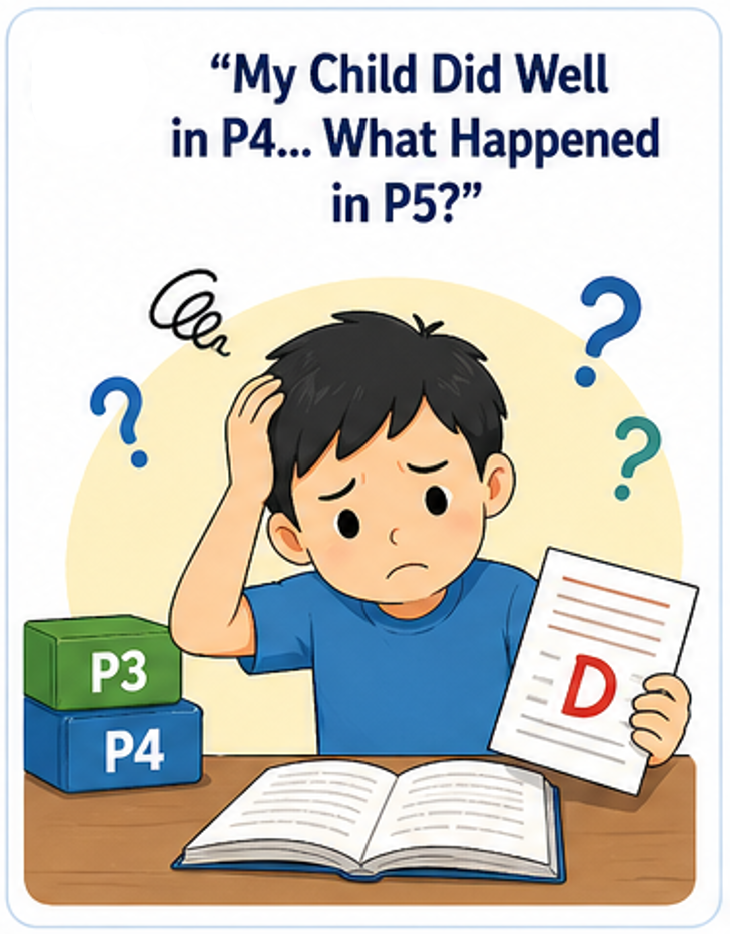
Here is the brutal truth you need to hear: Your child didn’t suddenly get weaker. They are just using a P4 map to navigate a P5 minefield.
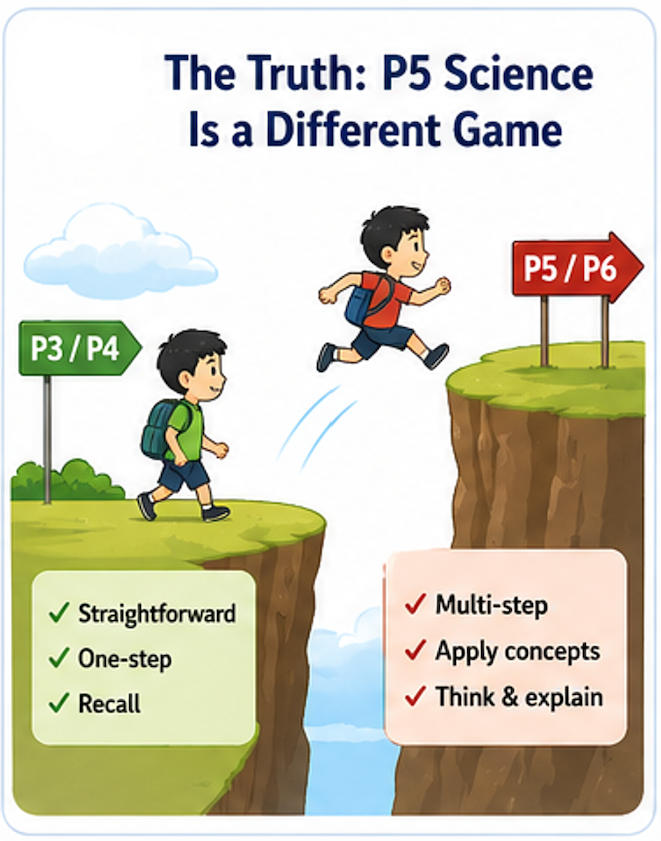
The Reality: P5 Science is a Completely Different Game
In Primary 3 and 4, Science is largely about memory work. The questions are straightforward, the answers are one-step, and rote recall is rewarded.
In Primary 5, the MOE syllabus shifts drastically. The examiners stop asking what your child knows and start testing how your child thinks.
Here is exactly how the expectations change:
| In P3 & P4 Science (The Comfort Zone) | In P5 & P6 Science (The Reality Check) |
| Direct Recall: “What is the function of the stem?” | Application: “An experiment wrapper blocks the outer layer of a stem. Explain what happens to the roots after two weeks.” |
| One-Step Answers: State a fact, get a mark. | Multi-Step Logic: Connect 2 to 3 concepts to form a single answer. |
| Familiar Layouts: Diagrams look exactly like the textbook. | Unfamiliar Contexts: Real-world scenarios (e.g., how an automated soap dispenser or an air fryer works). |
If your child relies solely on memorising model answers, P5 Section B (Open-Ended Questions) will completely destroy their grades.
The 3 Big Reasons Your Child’s Marks are Bleeding in Section B
1. The “Concept Correct, But Zero Marks” Phenomenon
Your child reads a question, understands the science behind it, and writes an answer that makes sense to you. But the exam paper comes back with a big fat zero and a teacher’s comment: “Vague” or “Missing Keywords.” In P5, teachers look for precise scientific phrasing. A near-miss is a total miss.
2. Topic Stacking (Cross-Topic Questions)
P5 exam papers no longer test topics in isolation. The examiners will blend Heat Energy (P4) with Water Cycle (P5), or Plant Anatomy (P3) into a single, complex 3-mark question. If your child cannot link these concepts together, they freeze.
3. The “Template-Proof” Exam Paper
MOE has deliberately designed modern PSLE-style questions to be immune to assessment book templates. If your child is trained to only answer questions that look exactly like the ones they’ve practiced before, they will lose easily preventable marks the moment a “twist” is introduced.
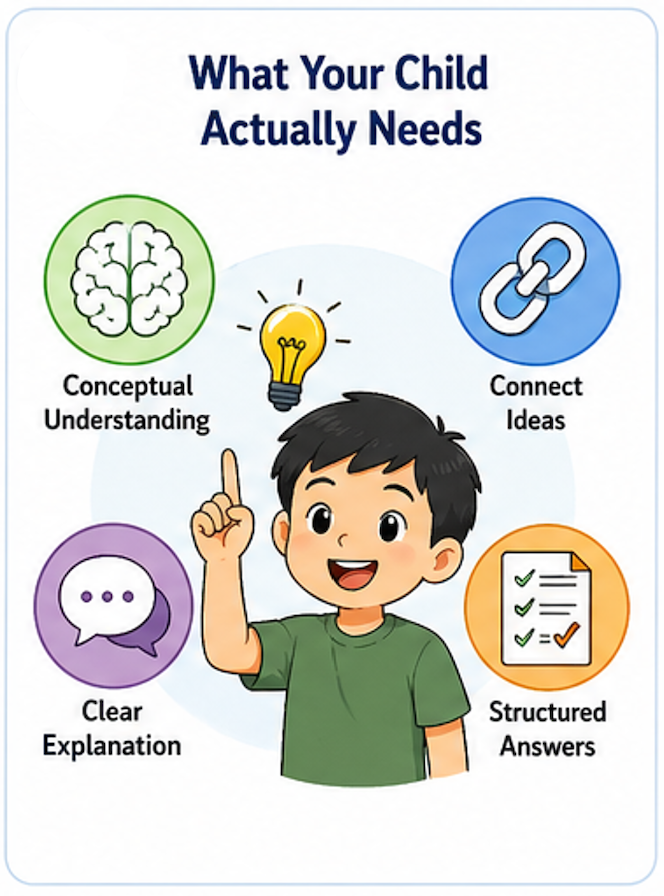
How to Save Your Child’s Science Grade Before the PSLE Runway Shortens
Do not wait until the P5 End-of-Year exams to fix this. The longer you wait, the harder it is to break bad habits. Here’s how to prepare your child before the drop happens:
Step #1: Build Strong Foundations
- Focus on understanding, not memorising
- Ask “why” and “how” questions
Step #2: Master Keywords
- Learn key scientific terms
- Practise using them in answers
Step #3: Practise Thinking Questions
- Expose your child to open-ended questions
- Train them to break down questions
Step #4: Use Answer Frameworks
- Teach structured answering (e.g. CER)
- Ensure answers are complete and logical
Step #5: Review Mistakes Properly
- Don’t just correct – understand why
- Identify patterns in errors
Step #6: Build Exam Stamina
- Managing pressure and focus
- Timed practices
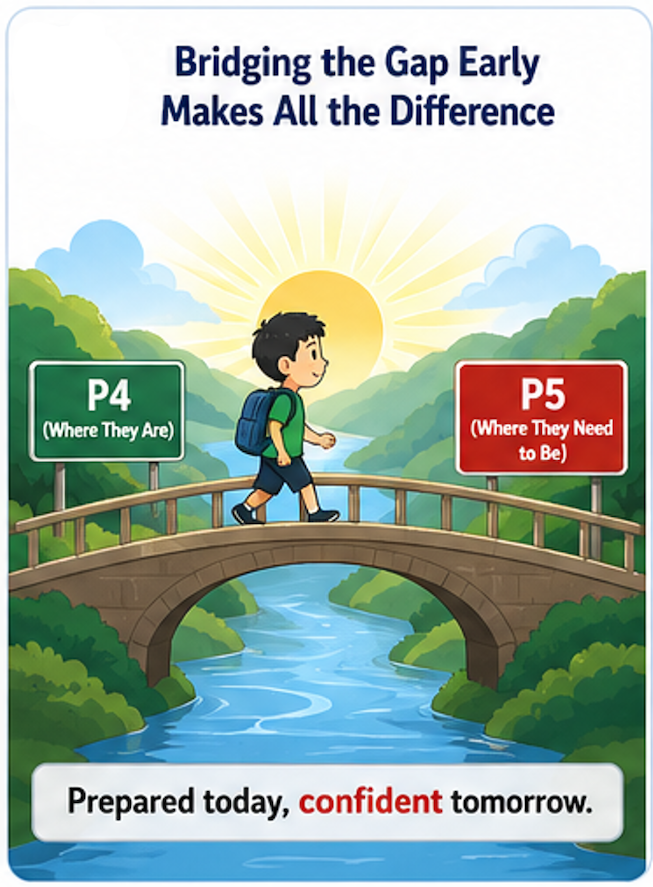
Bridging the Gap Early Makes All the Difference
The students who handle P5 well are not necessarily “smarter.” They were prepared differently.
They:
- Learned how to think
- Practised applying concepts
- Built answering skills early
Conclusion
The P5 grade drop is entirely preventable. The students who cruise through P5 and head into the PSLE with confidence aren’t necessarily naturally smarter, they were simply trained to think, not parrot.
If your child is currently stuck in the P5 drop, it isn’t a reflection of their potential. It is a reflection of their current technique.
Ready to Stop the Guesswork?
At Powerplay Edu Lab, we specialize in helping primary students bridge the gap between understanding Science and actually scoring the marks. We teach the logical frameworks required to crack Section B open-ended questions, turning struggling memorisers into analytical thinkers.
[Enquire About Our Science Coaching Lessons Today]
P.S. We also address exam anxiety and performance blocks because a brilliant mind can’t perform if it’s stressed.

Responses