

What is a Force?
A force is just a push or a pull.
You use forces every day — opening a door, kicking a ball, or zipping your bag.
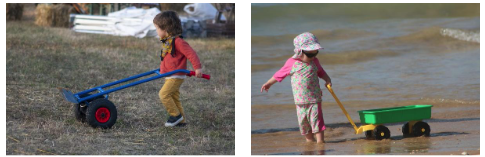
Forces can:
- Start something moving 🏃
- Stop something moving ✋
- Make it move faster or slower ⏩⏪
- Change its direction ↩️
- Change its shape 🛠️
1. Frictional Force: The Slowing Force

What it is:
Friction happens when two surfaces rub against each other.
Key things to remember (and avoid mistakes!):
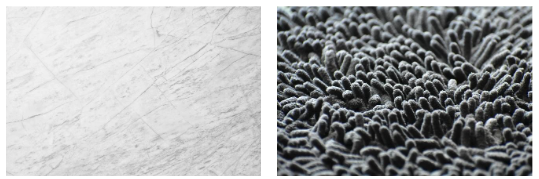
- Rough surface → more friction (carpet)
- Smooth surface → less friction (tiles)
- Friction can slow things down but can also help you grip (shoes on the floor).
❌ Misconception: Friction is always bad — but without it, you would slip when walking!
That’s why you can slide faster on a smooth floor than on a carpet!
Try it: Rub your hands fast — that heat is friction at work.
2. Elastic Spring Force: The Force That Bounces Back

What it is:
When you stretch or compress a spring, elastic spring force tries to return it to its original shape.
Key points to remember:
- The more you stretch or compress → the greater the elastic spring force
- This force acts in the opposite direction of the stretch or compression
- Works in things like trampolines, pogo sticks, and spring scales
❌ Common Misconceptions:
- Thinking the force pushes in the same direction you stretch — actually, it pushes back.
- Believing only springs have elastic force — rubber bands and some materials can also show this force.
Example:
When you pull a rubber band and let go, it snaps back because of elastic spring force.
3. Gravitational Force: The Downward Pull
What it is:
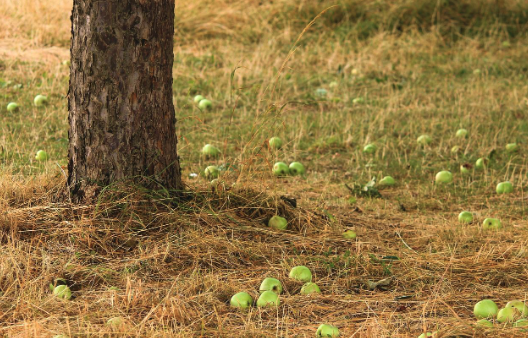
Gravity pulls everything toward Earth.
Key things to remember (and avoid mistakes!):
- Keep us on the ground
- Make rain fall
- Bring a ball back down after you throw it up
❌ Misconception:
Gravity only works on Earth — it’s actually everywhere! It’s also why the Moon orbits Earth.

4. Magnetic Force: Pulling and Pushing Without Contact
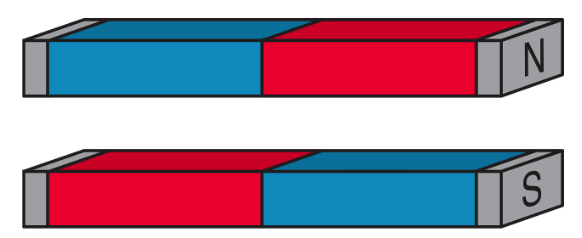
What it is:
Magnetic force acts at a distance. You don’t need to touch an object for a magnet to pull it!
Rules to remember:
- Unlike poles (North + South) attract
- Like poles (North + North or South + South) repel
- Only certain materials are magnetic (iron, steel, nickel, cobalt)
❌ Misconception: All metals are magnetic — nope! Coins like aluminium are not.
Balanced and Unbalanced Forces: The Tug of War
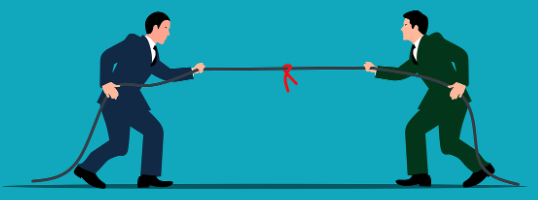
When multiple forces act on an object:
- If they are equal (balanced forces), the object remains stationary or continues to move at a constant speed
- If they are unequal (unbalanced forces), the object moves / stops, speeds up / slows down, or changes direction
Think: Why does the rope move in tug-of-war? The side with more force wins!
Why This Matters for PSLE
- Knowing what each force does helps you answer OEQs quickly.
- Watch out for trick questions mixing up gravity and magnetism.
- Always link force → effect in your answer.
Quick Recap Table:
| Force | What It Does | Example |
| Frictional Force | Slows down motion / helps grip | Shoes gripping the floor |
| Elastic Spring Force | Pulls stretched/compressed objects back to original shape | Rubber band snapping back |
| Gravitational Force | Pulls towards Earth | Ball falling |
| Magnetic Force | Attracts/repels at a distance | Fridge magnet |
Ready to test your knowledge?
📥 Click here to download the Forces worksheet and try it now!
Includes:
✔️ Multiple Choice Questions
✔️ Fill in the Blanks
✔️ Match the Columns
✔️ Short Answers
✔️ Answer Sheet Provided!

Responses