


Students sometimes need help to get around the academic world. The pressure to perform well and remember large volumes of knowledge is enormous.
One of my favourite tips to share with my students is mind mapping. It’s a game-changer for them, turning the way they organise their thoughts and ideas into something fun and creative. They really enjoy how it helps them make sense of everything and brings their learning to life.
Why mind map?
Studies on sensory learning types have found that around 65 per cent of the population is visual learners, and mind maps provide a visual way to organize thoughts and make complex information more accessible to digest.
Today, we’re going to dive into mind mapping and how it can help students succeed. We’ll talk about the benefits of using mind maps, how to create them effectively, and how to make them a part of your daily study routine.
What is Mind Mapping?
Mind mapping was created by Tony Buzan, a British author and educational consultant, in the 1970s. He was inspired by the way the human brain processes and organizes information, and he developed mind mapping as a tool to enhance creativity, memory, and learning.
Imagine a big tree. The trunk of the tree is the main idea you have, like “My Favourite Things.” From the trunk, branches grow out, and each branch is a different thing, like “Toys,” “Animals,” “Foods,” or “Games.”
Each branch has smaller twigs, and on these twigs are little details about each thing, like “Dogs,” “Cats,” and “Elephants.”
So, like a tree with many branches and twigs, a mind map helps you organize your thoughts and ideas in a way that makes it easy to see how everything is connected!

Mind Mapping vs. Traditional Note-Taking
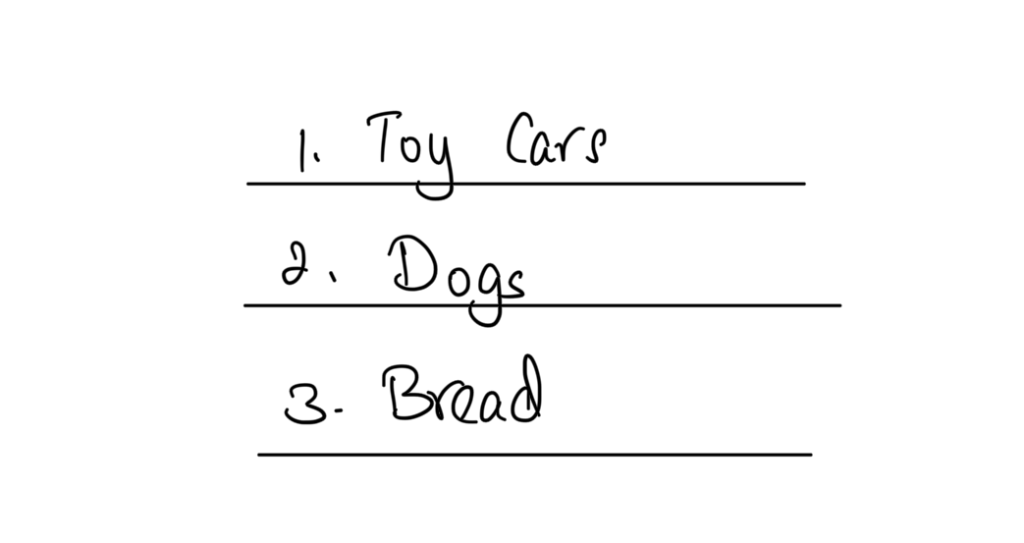
In traditional note-taking, we jot down each detail in a straight line, one after the other.
For example:
- Toy cars
- Dogs
- Bread
We can easily see them one after the other, but we cannot tell how they are related.
Mind maps, on the other hand, are like drawing a treasure map. Students get to draw out the details and see how everything connects. To create a mind map, they need to understand the concepts and see the connections, making the process more hands-on and engaging. This active approach helps them grasp the material better and remember it longer, making learning more fun and interactive.
At the same time, it is fun and easy to see how the details are connected, and it’s more colourful and exciting!

The Benefits of Mind Mapping for Students
Mind map is a power tool that enhances learning in many ways, which is why I impart this to all my students that I teach. Let me share with you the 2 main benefits of mind mapping.
1. Enhancing Memory and Retention
By organizing their information in the form of a mind map, students can simplify complex topics. This simplification allows them to study and understand difficult subjects more effectively.
The visual image allows them to recall the information more efficiently, thus positively impacting their memory.
When students create a mind map, they’re not just passively reading information. They actively engage with it, deciding where each piece fits the overall picture. This process can significantly enhance memory and retention.
2. Organizing Thoughts and Ideas
With a mind map, students can see their thoughts and ideas laid out visually. It makes brainstorming for a project, drafting an essay, or studying for an exam much easier and more creative. It turns the whole learning process into something more engaging and fun.
As they create the mind map, they feel a sense of accomplishment, breaking down a topic into smaller, manageable pieces. At the end of the creation, they can see the ‘big picture’, allowing them to study the materials more productively, less overwhelmingly, and less stressfully.
How to Create an Effective Mind Map
Let’s explore how to create a mind map effectively. The process is simple, yet it requires thoughtful engagement with the material.
I’ll show you a step-by-step guide to creating a mind map
- Start with a main idea or topic.
- Identify the key concepts related to this topic.
- Draw branches from the central idea to these key concepts.
- Add further details or subtopics to each branch.
Start with a main Idea or topic
The first step in creating a mind map is picking your main idea, like “My Favourite Things.” This will be the heart of your mind map.
Once you’ve decided on your main idea, write it in the centre of your page.
This main idea isn’t just where you start—it’s the anchor that holds your whole mind map together. All other ideas will branch out from this central concept, making it a crucial element of your mind map.
Identify the key concepts related to this topic
Once you have your main idea, the next step is to identify the key concepts related to it. These will form the main branches of your mind map.
Branches: Toys, Animals, Foods, Games
Draw branches from the central idea to these key concepts
Each branch should represent a distinct idea or topic. From each branch, you can then add further details or subtopics. This creates a hierarchical structure, with the most important ideas closest to the centre.
Further details for Animals: Cat, Dog, Elephant
Add further details or subtopics to each branch
Cat: meow, eats fish, smooth fur

Mind mapping Tools and Resources
For students, I usually recommend to use paper with different colours of pens.
As technology advances, there are numerous online tools and resources available to help with creation of mind maps. Some popular options include MindMeister, XMind, and Coggle. These tools offer a range of features to enhance your mind mapping experience.
Integrating mind maps into Study Routines
Including mind maps in your study regimen helps improve learning. It is not enough to simply create a mind map; you must also use it effectively.
Let me share with you some strategies:
- Review your mind maps regularly.
- Use them for exam preparation.
Regular Review and Revision
Reviewing and revising your mind maps is crucial. This helps reinforce the information in your memory.
Also, as you learn more, update your mind maps. This ensures they remain a comprehensive study aid.
Mind mapping for Exam Preparation
Mind maps can be a real game-changer when it comes to exam prep. They give you a visual snapshot of everything you need to review, which makes studying a lot more efficient.
When you look over your mind maps, you can spot the areas where you need to spend a bit more time. This helps to focus the revision efforts where needed most, making the study sessions more productive.
Mind Mapping Across Disciplines
Mind mapping isn’t just for one subject—it’s a super handy tool you can use for anything you’re studying.
Whether it’s history, science, or literature, mind maps help you organize your thoughts and ideas, making everything clearer and easier to understand.
Adapting mind maps for Various Subjects
Adapting your mind maps to fit different subjects is key. For instance, a mind map for a literature review might focus on themes and character relationships.
On the other hand, a science mind map might illustrate processes and systems. Tailoring your mind maps to the subject matter enhances their effectiveness.
Conclusion: The Role of mind mapping in Long-Term Academic Success
Mind mapping is more than just a study tool. It promotes critical thinking, creativity, and successful learning habits.
By combining mind maps into study routines, students can improve their academic performance and lay the foundation for long-term success. Mind mapping is an effective approach for student success.

Responses