


Do you know why your shadow follows you on a sunny day? Or why you can’t see your favorite toy in a pitch-black room? In Science, we don’t just guess—we observe the properties of light.
1. How Do We See?
We can only see things when light enters our eyes. There are two ways this happens:
- From a Light Source: Objects like the Sun, a lit torch, or a glowing light bulb. These objects give off their own light.
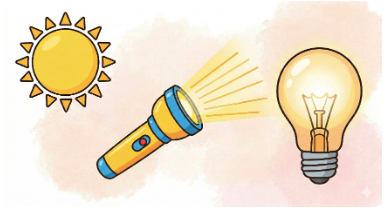
- By Reflection: Objects like your textbook, a table, or a mirror do not give off light. We see them because they reflect light from a source into our eyes.
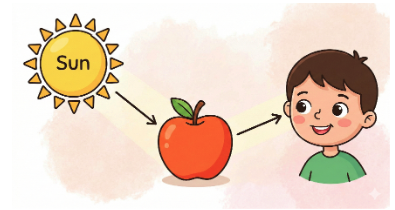
Exam Tip: If there is no light source, there is no light to reflect. That is why it is impossible to see in total darkness!
2. The Golden Rule: Light Travels in a Straight Line
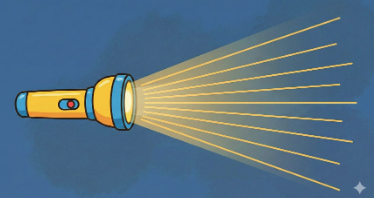
This is the most important concept in this chapter. Light does not bend around corners.
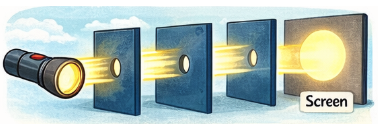
The Experiment: If you line up three pieces of cardboard with holes in the middle, you can only see the light from a torch if the holes are in a perfectly straight line. If you shift one cardboard, the light is blocked. This proves that light travels in straight lines.
3. How are Shadows Formed?
A shadow is not a “thing”, it is actually an area of darkness.
A shadow is formed when the path of light is blocked by an opaque or translucent object. Because light travels in straight lines and cannot bend around the object, a dark region forms on the screen behind it.
When an object blocks light:
- Light cannot pass through that area.
- A dark area forms behind the object.
- That dark area is called a shadow.
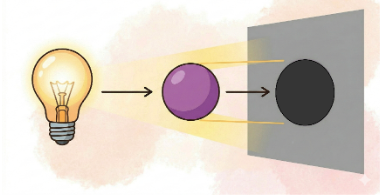
For example:
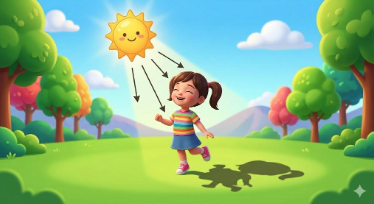
- Stand under the Sun → Your body blocks sunlight → A shadow forms on the ground.
- Shine a torch at your hand → A shadow appears on the wall.
4. Changing the Size of a Shadow
In your Science exams, you will often be asked how to make a shadow bigger or smaller. Remember these two variables:
| Action | Effect on Shadow Size |
| Decrease distance between Light Source and Object | Shadow becomes Larger |
| Increase distance between Light Source and Object | Shadow becomes Smaller |
| Increase distance between Object and Screen | Shadow becomes Larger |
| Decrease distance between Object and Screen | Shadow becomes Smaller |
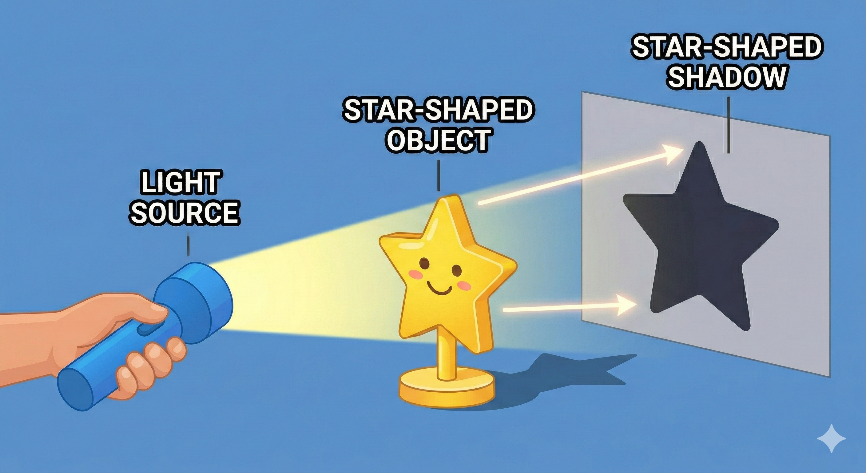
(i) Shape of the Object
The shadow has the same outline as the object.
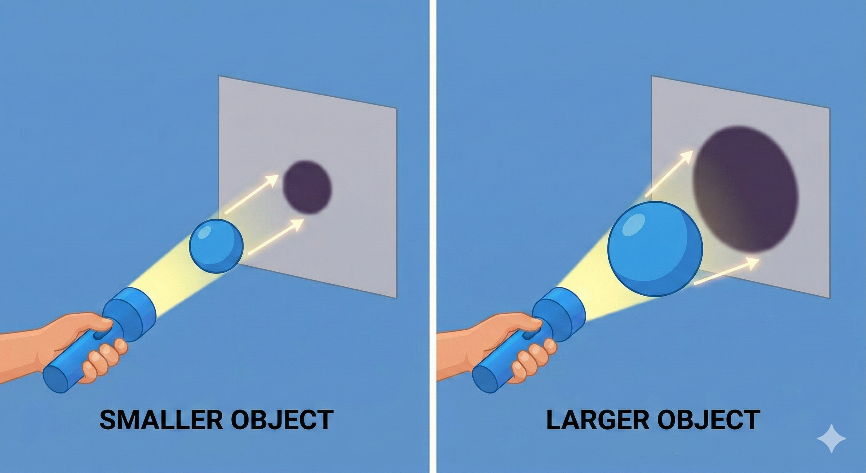
(ii) Size of the Object
A bigger object produces a bigger shadow (if all other factors stay the same).
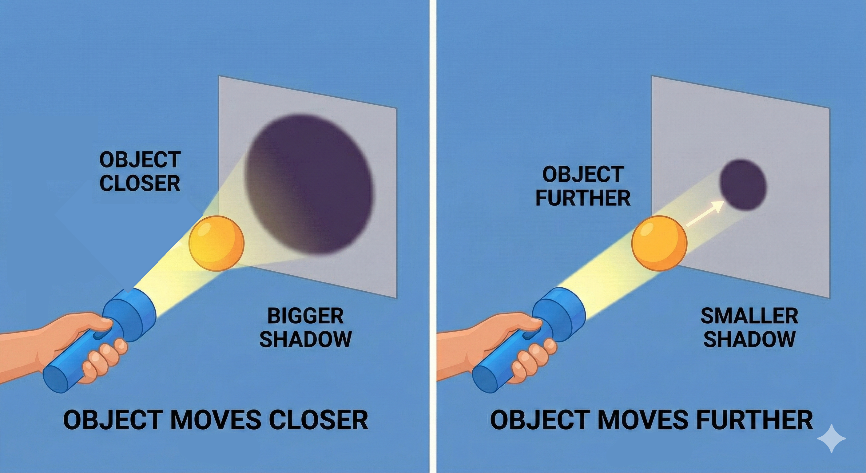
(iii) Distance Between Light Source and Object
When the object moves closer to the light source:
- The shadow becomes bigger.
When the object moves further from the light source:
- The shadow becomes smaller.
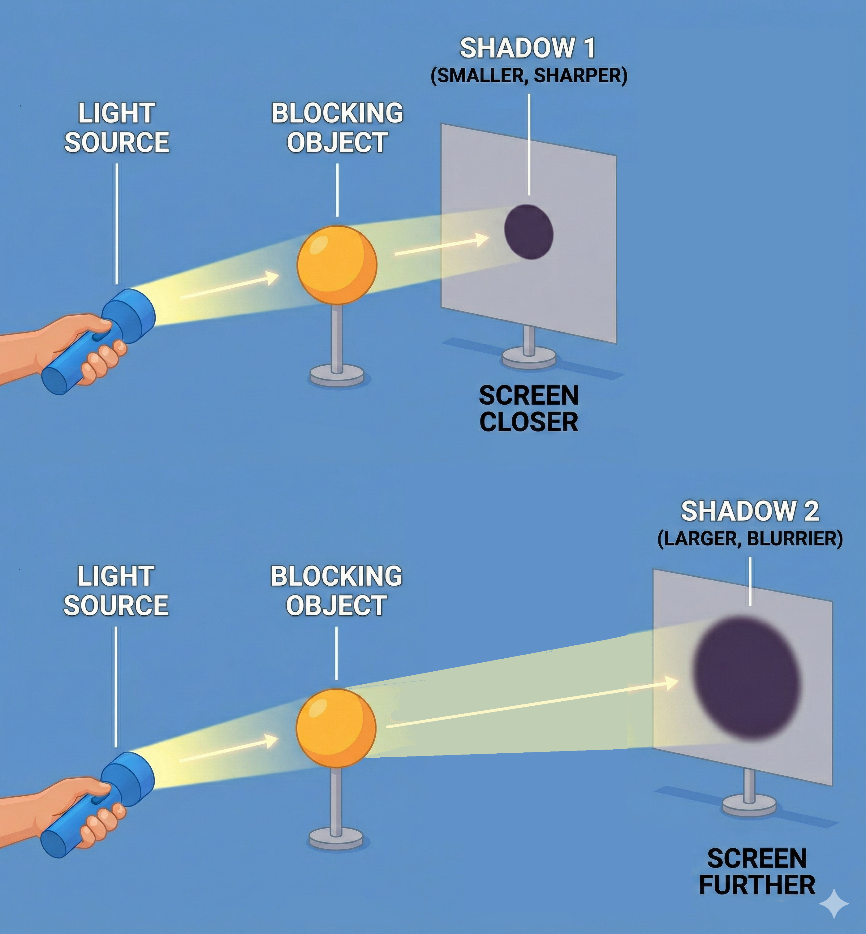
(iv) Distance Between Object and Screen
When the object moves closer to the screen:
- The shadow becomes smaller and clearer.
When the object moves further from the screen:
- The shadow becomes larger and blurrier.
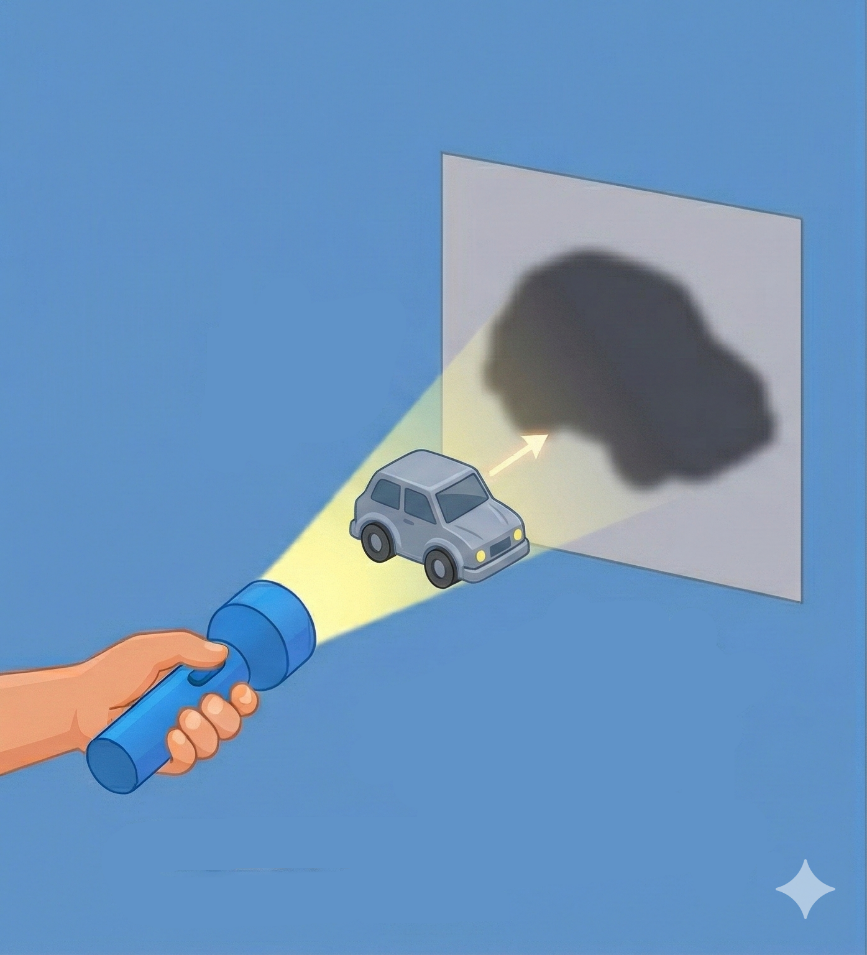
Simple Investigation Activity
Try this at home or in class:
You will need:
- A torch
- A small toy
- A wall (screen)
Change one factor at a time:
- Move the toy closer to the torch.
- Move it further away.
- Change the toy.
Observe what happens to the shadow.
Scientists show objectivity by using careful observations and data to explain what they see.
Instead of guessing, we:
- Observe carefully
- Compare results
- Record findings
That is how we learn about light!
5. Summary Checklist for Students
To master this topic, you must use these keywords in your answers:
- Light Source: Anything that gives off its own light.
- Reflect: Light bouncing off a surface.
- Straight Lines: The direction in which light travels.
- Blocked: What happens to light when it hits an opaque object.
- Opaque / Translucent / Transparent: How much light can pass through a material.
Think Like a Scientist
Don’t just read, investigate! Take a torch and a toy. Move the torch closer and further away. Does the shadow match your data? Scientists use objectivity; they record what they actually see, not what they think they should see.
Ready to ace your Science Paper?
Click here to download your FREE Primary 4 Light and Shadow Practice Paper!

Responses